

Climate & seasons
When to go to South Korea?
Monthly averages over the past 5 years (Open-Meteo).
Avoid
- January
- February
- July
- August
- December
| Jan | Feb | Mar | Apr | May | Jun | Jul | Aug | Sep | Oct | Nov | Dec | |
|---|---|---|---|---|---|---|---|---|---|---|---|---|
| Our take | ||||||||||||
| Weather | ||||||||||||
| High | 0° | 3° | 10° | 16° | 20° | 25° | 27° | 27° | 23° | 16° | 10° | 1° |
| Rain (mm) | 20 | 29 | 72 | 75 | 115 | 184 | 299 | 227 | 190 | 80 | 45 | 31 |
| Hiking & nature | Hiking & nature April | Hiking & nature May | Hiking & nature October | |||||||||
| City sightseeing | City sightseeing March | City sightseeing April | City sightseeing May | City sightseeing October | ||||||||
| Winter sports | Winter sports January | Winter sports February | Winter sports December |
What to do by season (autumn)
-
Hiking & nature
Mild temperatures, stable conditions.
-
City sightseeing
Pedestrian-friendly most of the year.
Best months are April-May (cherry blossom) and mid-October to early November (foliage); July-August combine monsoon, heat and typhoons.
South Korea has four sharply defined seasons, and two of them are made for travelling: spring and autumn. The climate table on the page gives the averages month by month; this text turns them into practical choices, depending on whether you come for the palaces of Seoul, the temples of Gyeongju, the beaches of Busan or the volcanic landscapes of Jeju.
Spring: cherry blossom and clear skies (March to May)
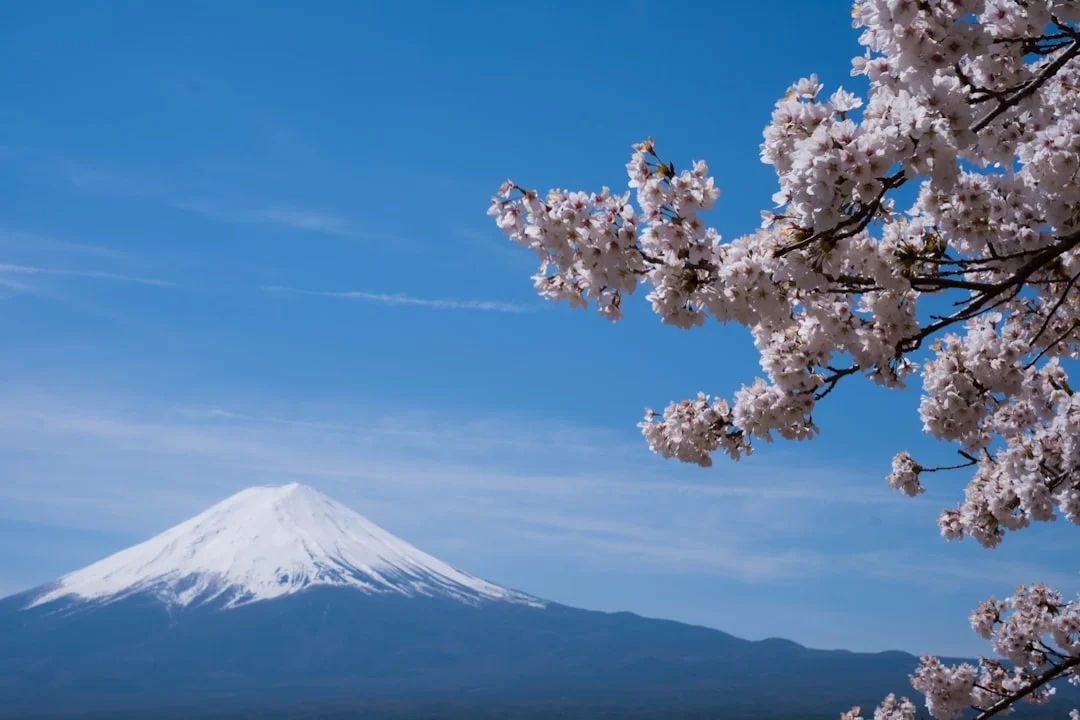
In March, daytime highs do not exceed 10°C and nights stay close to 0°C; it is the month for warm jackets, but also for the first rapeseed flowers (yuchae) on Jeju. The cherry blossom opens from late March on Jeju, in Busan and in Jinhae, up to early April in Seoul (Yeouido park, the Seoul city wall, Seokchon Lake). Dates shift by a week from year to year and the bloom lasts barely ten days: aim for the first week of April in Seoul.
April averages around 16°C by day and 5°C at night, with 75 mm of rain. May is the most pleasant month: close to 20°C in the afternoon, 9°C at night, long days, but already 115 mm of rain, often in short showers. One drawback in spring: fine dust and yellow dust blown in from Mongolia and China, mostly from March to May, sometimes veil the sky for a few days (see the safety section).
Summer: monsoon, heat and typhoons (June to August)
June climbs to 25°C with 184 mm of rain. The monsoon, called jangma, sets in from late June to late July: July is the wettest month of the year with nearly 300 mm, at 27°C by day and 20°C at night, in crushing humidity. August stays at 27°C and 227 mm, with the risk of typhoons, which hit Jeju and the south coast first. For a first trip, skip it: open-air palace visits become punishing and hikes are often cancelled.
Summer does have its draws for a specific audience. Swimming at Haeundae and Gwangalli is officially open in July and August (sea at about 24-26°C in August), and the Boryeong Mud Festival draws crowds in early July. Expect beach accommodation to cost 20 to 30% more at the height of the school holidays, from late July to mid-August.
Autumn: foliage and settled weather (September to November)
September is still hot (23°C) and wet (190 mm), with the tail end of the typhoon season. The shift comes in October: 16°C by day, 8°C at night and only 80 mm of rain, then 45 mm in November. The autumn foliage starts on Seoraksan in mid-October, reaches the palaces of Seoul (Changdeokgung and its Huwon garden, Gyeongbokgung) from late October to early November, then the temples of Gyeongju and Naejangsan in November. In November, daytime highs drop to 10°C: pack a light down jacket for the evenings.
This is also the period most in demand among Korean travellers themselves: October weekends fill hotels, trains and trails. The Busan International Film Festival takes place in October; accommodation in Haeundae and Nampo can then double in price. The Seoul Lantern Festival lights up the Cheonggyecheon in November.
Winter: dry, bright and very cold (December to February)
From December to February, Seoul stays at or just above freezing by day (highs of 0 to 3°C) with nights between -6 and -8°C according to the page's table, and very little rain (20 to 30 mm), often falling as snow. The sky is crystal clear and snow-covered palaces are superb, but the icy wind keeps open-air visits short. Busan and Jeju are four to six degrees milder. Homes are heated through the floor (ondol): winter is best enjoyed indoors, in public bathhouses (jjimjilbang), in covered markets and on the ski slopes of Pyeongchang and Yongpyong, open from December to March. January hosts the Hwacheon ice fishing festival.
Festivals and public holidays to build into your calendar
Seollal, the Lunar New Year, falls in early February in 2027, and Chuseok, the harvest festival, in mid-September 2027 (official Korean calendar dates are on the tourist office site, english.visitkorea.or.kr). Each festival means three public holidays, sometimes extended by a bridge day: Koreans travel home to their families, KTX tickets sell out weeks ahead, and many restaurants and shops close, while palaces and major tourist sites stay open. Early October combines Foundation Day (3 October) and Hangeul Day (9 October), which creates long weekends.
Which month for which traveller
- First trip, sightseeing and photos: the first week of April (cherry blossom) or late October (foliage), booking two to three months ahead.
- Low budget and quiet: May or early November, cheaper and less crowded than the April and October peaks.
- Hiking: mid-September to mid-November, when the trails of Seoraksan, Hallasan and Bukhansan are dry.
- Beach and nightlife: July-August in Busan, accepting heat, crowds and the risk of a typhoon.
- Skiing and hot baths: January-February, with low hotel prices in Seoul outside Seollal.
For Jeju, the best compromise is April-May (rapeseed, cherry blossom) or October-November (silver grass, mandarin harvest).
Sources
The figures in this guide come from the sources below, checked on the publication date.
- www.diplomatie.gouv.fr
- www.gov.uk
- www.e-arrivalcard.go.kr
- www.k-eta.go.kr
- english.visitkorea.or.kr
- royalpalace.go.kr
- whc.unesco.org
- whc.unesco.org
- whc.unesco.org
- whc.unesco.org
- whc.unesco.org
- www.korail.com
- eng.templestay.com
- www.jeju.go.kr
- www.cia.gov
- www.ou-et-quand.net
- us.trip.com
- www.diplomatie.gouv.fr
- taxnews.ey.com
- english.visitkorea.or.kr
- www.k-eta.go.kr
- airkorea.or.kr
- web.kma.go.kr