

Climate & seasons
When to go to Fez?
Monthly averages over the past 5 years (Open-Meteo).
Best months
- February
- April
- May
- October
- November
Avoid
- July
- August
| Jan | Feb | Mar | Apr | May | Jun | Jul | Aug | Sep | Oct | Nov | Dec | |
|---|---|---|---|---|---|---|---|---|---|---|---|---|
| Our take | ||||||||||||
| Weather | ||||||||||||
| High | 19° | 20° | 21° | 25° | 30° | 34° | 39° | 39° | 33° | 30° | 23° | 19° |
| Rain (mm) | 49 | 54 | 108 | 47 | 33 | 13 | 0 | 1 | 22 | 35 | 36 | 82 |
| City sightseeing | City sightseeing January | City sightseeing February | City sightseeing March | City sightseeing April | City sightseeing May | City sightseeing November | City sightseeing December |
What to do by season (autumn)
-
City sightseeing
Pedestrian-friendly most of the year.
The best months to visit Fez are April, May, October and November; July averages above 39 °C and January nights fall to 6.6 °C.
Fez at a glance: four very different seasons
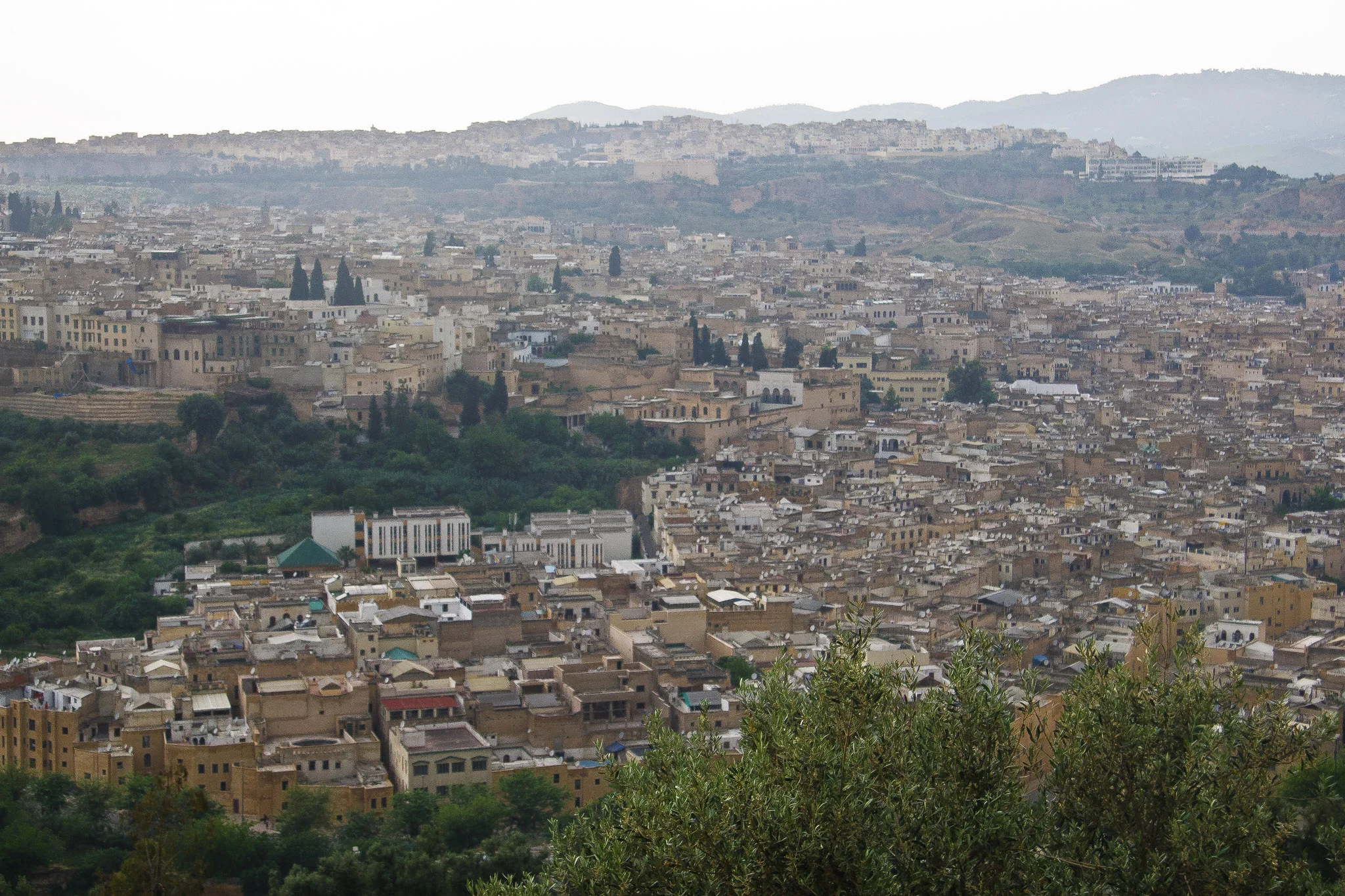
Fez sits inland at about 400 m above sea level. The climate is continental, with none of the ocean breeze you get in Rabat or Essaouira. The climate table on the page shows it clearly: a 39 °C average high in July against 18.5 °C in January, with nights falling to 6.6 °C in midwinter. The month you choose matters more here than in most Moroccan cities.
Winter (December to February): cool, quiet and sometimes wet
In January, expect 18.5 °C in the afternoon, 6.6 °C at night and about 49 mm of rain. February is slightly milder (20.3 °C / 8.2 °C, 54 mm). December is the wettest winter month with 82 mm and a 19 °C high. Riads and madrasas are not heated the way homes in Europe are, so pack a fleece, shoes that cope with wet lanes, and ask your riad about a space heater before you book. In return the lanes are almost empty, riad rates often fall by about a third compared with spring (rough order of magnitude), and the light is lovely for photographing the medina. Christmas and New Year weekends stay pricier and fill up.
To compare with other winter destinations, our article Morocco or Tunisia in winter lists temperatures for several cities.
Spring (March to May): the best window
March is the wettest month in the table with 108 mm and a 21.2 °C high: bring a rain jacket, though showers are short and the countryside around Fez is green. April (24.9 °C / 12.1 °C, 47 mm) is the best-balanced month: you can walk all day without suffering. May climbs to 29.9 °C with 33 mm of rain. It is still pleasant in the morning and late afternoon, but you will want shade between 1 pm and 4 pm. It is also high season for riads: book 4 to 8 weeks ahead, longer for a French school-holiday weekend.
Summer (June to August): extreme heat, for the determined
In June, the high is 34.2 °C with 13 mm of rain. In July it is 39.4 °C (nights at 21.9 °C) with no rain, and in August 38.9 °C. Spikes above 40 °C (104 °F) are common in the Sebou valley. In the narrow lanes of the medina shade helps, but the air stands still. If you come in summer, leave your hotel at 8 am, rest between 1 pm and 5 pm, choose a riad with a pool or a cool courtyard, drink at least 2 litres of water a day and carry a hat. Riad prices are the lowest of the year and tour groups are fewer, but many visitors cut their stay to two nights.
Autumn (September to November): the second ideal window
September is still hot (33.1 °C, 22 mm). October (30.1 °C / 16.7 °C, 35 mm) and November (23.2 °C / 11.1 °C, 36 mm) are the most comfortable months after April: golden light, lively souks and tanneries that smell less than in summer. The first rains arrive in late October or November and are rarely long. October weekends are also when riads fill up, so book at least a month ahead.
Ramadan: know the dates before you book
Ramadan 2027 is expected to begin around 8 February 2027 (approximate: it depends on the moon sighting and will be announced by the Ministry of Habous and Islamic Affairs a few days before). It lasts 29 or 30 days. During that time most medina restaurants close by day or serve behind curtains, souks open later and office hours get shorter. Evenings, after the fast is broken at sunset (iftar), are lively. Non-Muslim visitors are not required to fast but should avoid eating, drinking or smoking openly in the street. Eid al-Fitr, which ends the month, closes shops for one to three days. Ramadan moves back by about 11 days each year.
Events: the Festival of World Sacred Music
The Fez Festival of World Sacred Music is the city's major cultural event. The 28th edition ran from 16 to 24 May 2025 and the 29th from 4 to 7 June 2026, with more than 160 artists. The calendar has therefore moved between May and June. The 2027 dates were not published at the time of writing: check the official site fesfestival.com before you buy flights, and book your riad as soon as they are announced, because festival nights sell out. Concerts take place in heritage venues such as Bab Makina and the Dar Batha palace.
Which month for which traveller?
- First visit, walking and photos: April, October or early November.
- Small budget: January-February or July-August, at the price of cold or heat you have to accept.
- Culture and music: festival season (May-June); book early.
- Ramadan atmosphere: February 2027 for the evenings, with restaurants closed by day.
- Families with children: April, May or October; avoid July-August with children under 10.
Fez combines easily with the desert and the imperial cities: plan 2 to 3 nights here, and fit the season to the most demanding stage of your route, often the desert, which is more bearable from autumn to spring.
Sources
The figures in this guide come from the sources below, checked on the publication date.
- whc.unesco.org
- www.visitmorocco.com
- www.visitmorocco.com
- www.diplomatie.gouv.fr
- www.diplomatie.gouv.fr
- www.diplomatie.gouv.fr
- ma.diplomatie.gouv.fr
- en.wikipedia.org
- en.wikipedia.org
- en.wikipedia.org
- en.wikipedia.org
- en.wikipedia.org
- en.wikipedia.org
- www.diplomatie.gouv.fr
- fesfestival.com
- telquel.ma
- fr.le360.ma
- www.timeanddate.com
- www.lonelyplanet.fr