

Fez is safe for travellers: beware of unofficial guides and theft in the medina. Emergencies: police 19, rescue 15, gendarmerie 177.
Risk level: Fez is a safe destination, with three points of vigilance
According to the "Travel advice" page of the French Ministry for Europe and Foreign Affairs (last update consulted: 10 September 2026), Morocco is a country where you should stay alert to theft, unofficial guides and the terrorist threat. In Fez, violent crime against tourists is rare: most incidents are scams and pickpocketing in the medina crowds.
Unofficial guides and touts
Unofficial guides cluster around Bab Bou Jeloud, the ONCF station and the approaches to the Karaouiyine. The classic script: "the gate is closed today, come, I know another way", followed by a detour to a tannery or shop where he earns a commission, and a request for money at the end. The Fez tourist police run regular operations, and hundreds of fake guides are referred to court every year. Ways to protect yourself:
- An official licensed guide wears a visible accreditation badge issued by the authorities. Ask to see it. Agree the fee before you set off: expect MAD 250 to 400 for half a day (rough guide; ask the tourist office or your riad).
- Book a guide through your riad or the tourist office (Place de l'Istiqlal, Ville Nouvelle) rather than on the street.
- Decline politely, once, with a smile and a "la shukran" (no thank you). Looking at your phone or an offline map stops most approaches.
- Tell your guide you want no shops: even official guides earn commissions in workshops, which inflates prices.
- At the Chouara tannery you are often offered a mint leaf and balcony access in exchange for a "tip": agree it in advance (MAD 20 to 50 is enough).
Getting lost in the medina
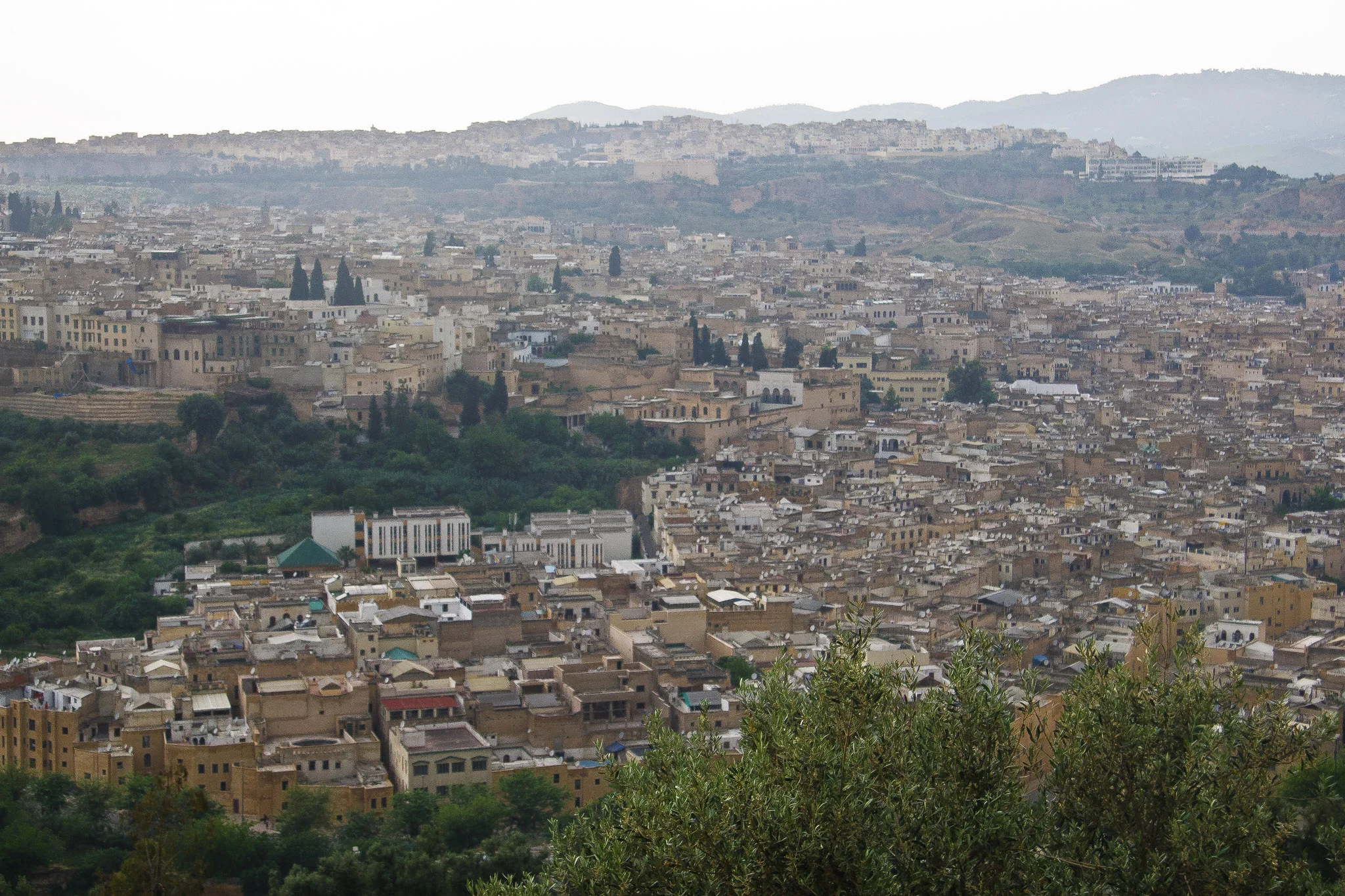
Fes el-Bali has more than 9,000 lanes over about 280 hectares, and usual landmarks disappear: GPS is imprecise and alleys look alike. On day one, note the name of the gate nearest your riad (Bab Bou Jeloud, Bab Guissa, Bab Ftouh) and download an offline map. When you are lost, step into a shop or ask a shopkeeper rather than a stranger who has been following you, and do not say where you are staying. A young child who offers to guide you will then ask for money: give MAD 5 to 10 if he puts you back on track. Avoid walking alone in deserted lanes after dark.
Theft and personal safety
- Wear your bag across your body at the front, never on the street-side shoulder. Keep phone and passport in an inside pocket.
- Snatch thefts happen mostly near Bab Bou Jeloud, in crowded markets and at the station. Leave your passport in the riad safe and keep a photocopy or photo.
- Withdraw cash from an ATM in daylight, in the Ville Nouvelle.
- Avoid the Marinid Tombs after dark: the site is isolated and unlit.
Women travelling alone
Persistent remarks and whistling are common. Most women avoid the issue by covering shoulders and knees, not answering and walking with purpose. Take a petit taxi in the evening rather than walking back alone, and pick a riad whose owner meets you at the gate.
Taxis and transport
Red petits taxis must use the meter. If the driver refuses, get out. A city ride usually costs MAD 7 to 20 by day, with a 50% surcharge after 8 or 9 pm (rough guide; check the city's current rate). Make sure it is an official petit taxi (red in Fez) before you get in.
Health and environment
In summer heatstroke is the real risk: a 39 °C average in July, with peaks above 40 °C. Drink 2 litres of water a day and stay out of the medina between 1 pm and 4 pm. Food poisoning mostly affects people who eat salads washed in tap water or street fruit juices: choose busy restaurants. A rise in measles cases was reported in 2026, so check your vaccinations.
Terrorism and demonstrations
A terrorist threat exists, as across the region. The ministry advises staying informed through its Fil d'Ariane service (free registration). Avoid gatherings, demonstrations and areas flagged for heightened vigilance on the ministry's map.
Emergency numbers
Police: 19 (in town). Rescue, fire and ambulance: 15. Royal Gendarmerie (outside urban areas): 177. From a foreign mobile, dial these numbers without a country code. If you lose your passport or have it stolen, contact the French consulate general in Fez, which issues an emergency travel document, and file a report at the tourist police station.
Sources
The figures in this guide come from the sources below, checked on the publication date.
- whc.unesco.org
- www.visitmorocco.com
- www.visitmorocco.com
- www.diplomatie.gouv.fr
- www.diplomatie.gouv.fr
- www.diplomatie.gouv.fr
- ma.diplomatie.gouv.fr
- en.wikipedia.org
- en.wikipedia.org
- en.wikipedia.org
- en.wikipedia.org
- en.wikipedia.org
- en.wikipedia.org
- www.diplomatie.gouv.fr
- fesfestival.com
- telquel.ma
- fr.le360.ma
- www.timeanddate.com
- www.lonelyplanet.fr