

French, Belgian, Swiss and Canadian citizens enter Tunisia visa-free for 90 days with a passport valid 3 months; ID cards are no longer accepted.
Entering Tunisia on French, Belgian, Swiss and Canadian passports
Citizens of France, Belgium, Switzerland and Canada need no visa for a tourist stay of up to 90 days. A passport is mandatory: since 1 January 2025, France Diplomatie states that all visitors must present a passport valid for at least 3 months on the date of entry. The national identity card is no longer accepted for entry, including on package tours. This rule applies even though Tunisia is not in the Schengen area.
For Belgians, Swiss and Canadians, 90 days without a visa is the general rule for tourist stays; check your foreign ministry's website for special cases (dual nationality, emergency passport, business stays). A visa or residence permit is needed beyond 90 days.
On arrival
- A return or onward ticket may be requested at the border.
- An accommodation address is useful for the police form: note down that of your guesthouse or hotel.
- Keep your passport with you in Kelibia: routine checks are frequent on the cape's roads.
Dinar and customs
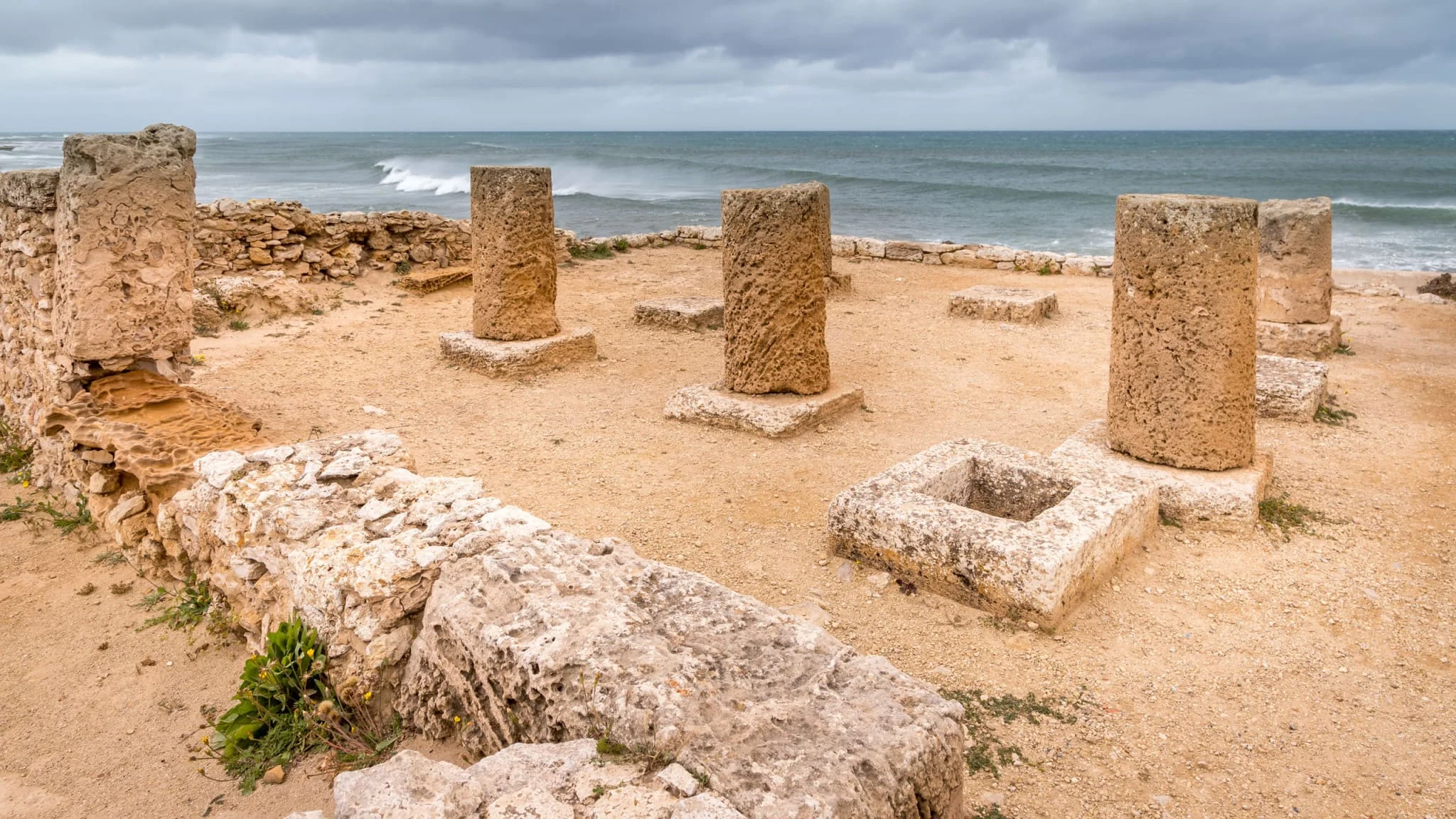
The Tunisian dinar is not convertible: importing and exporting it is prohibited. Above the foreign-currency threshold set by customs (amount to check on the Tunisian customs website), declaration is mandatory on entry. Keep your exchange receipts so you can convert leftover dinars when leaving. There are also restrictions on bringing in drones, undeclared connected devices, large quantities of medication and alcohol beyond a few litres per person. Antiquities, including pieces from archaeological sites (Kerkouane, Kelibia), must never be taken away: exporting them is prohibited.
Health
No vaccine is required to enter Tunisia from France. Update your usual vaccines (tetanus-diphtheria-polio, measles-mumps-rubella: France Diplomatie publishes a measles alert). Hepatitis A is recommended for a long stay or off the tourist track. The EHIC card is not valid in Tunisia, which is not an EU member: take out travel insurance with repatriation cover before leaving (budget 20 to 60 euros for a week depending on cover). The health system is uneven: private clinics in Nabeul and Tunis accept payment cards but often ask for an advance. Drink bottled water, protect yourself from the sun (high UV index from May to September) and carry your medication in its original packaging, with the prescription.
Tourist tax and fees
A small tourist tax applies in Tunisian hotels (on the order of 1 to 3 dinars per person per night, rate to check with the property); it is often included in the bill. No visa fee applies for a tourist stay of under 90 days for the nationalities above. Application fees for a possible visa on another passport are listed on the Tunisian embassy's website.
Driving in Kelibia
- The French licence is recognised for tourist stays; an international permit is useful in case of a check (rule to check with the Tunisian embassy). Carry your licence, vehicle registration or rental contract, and insurance.
- Drive on the right. Limits are 50 km/h in built-up areas, 90 km/h on roads and 110 km/h on the A1 Tunis-Hammamet motorway and then expressway; speed cameras and checks are frequent.
- There is no vignette and no low-emission zone in Kelibia. The Tunis-Hammamet motorway is tolled (a few dinars); the road to Kelibia is free but not always lit.
- Check the excess before signing a rental contract and photograph the car at pick-up.
Before you go
Read the France Diplomatie travel advice a few days before departure: entry rules, health and safety are updated there. Leave a copy of your passport with a relative, and register with the Ariane scheme if you are French. Belgians, Swiss and Canadians have equivalent schemes through their ministries.
Practical reminders for the stay
Keep a photo of your passport's photo page and entry stamp on your phone and in your luggage: it speeds up any replacement at the embassy. Register your accommodation address with your insurer, carry cash in small notes for taxis and markets, and buy a local SIM card from an operator's shop with your passport (a few dinars for the card, data packages from a few dinars). Check your rental contract for cross-border and off-road restrictions before heading out on tracks around the cape.
Sources
The figures in this guide come from the sources below, checked on the publication date.