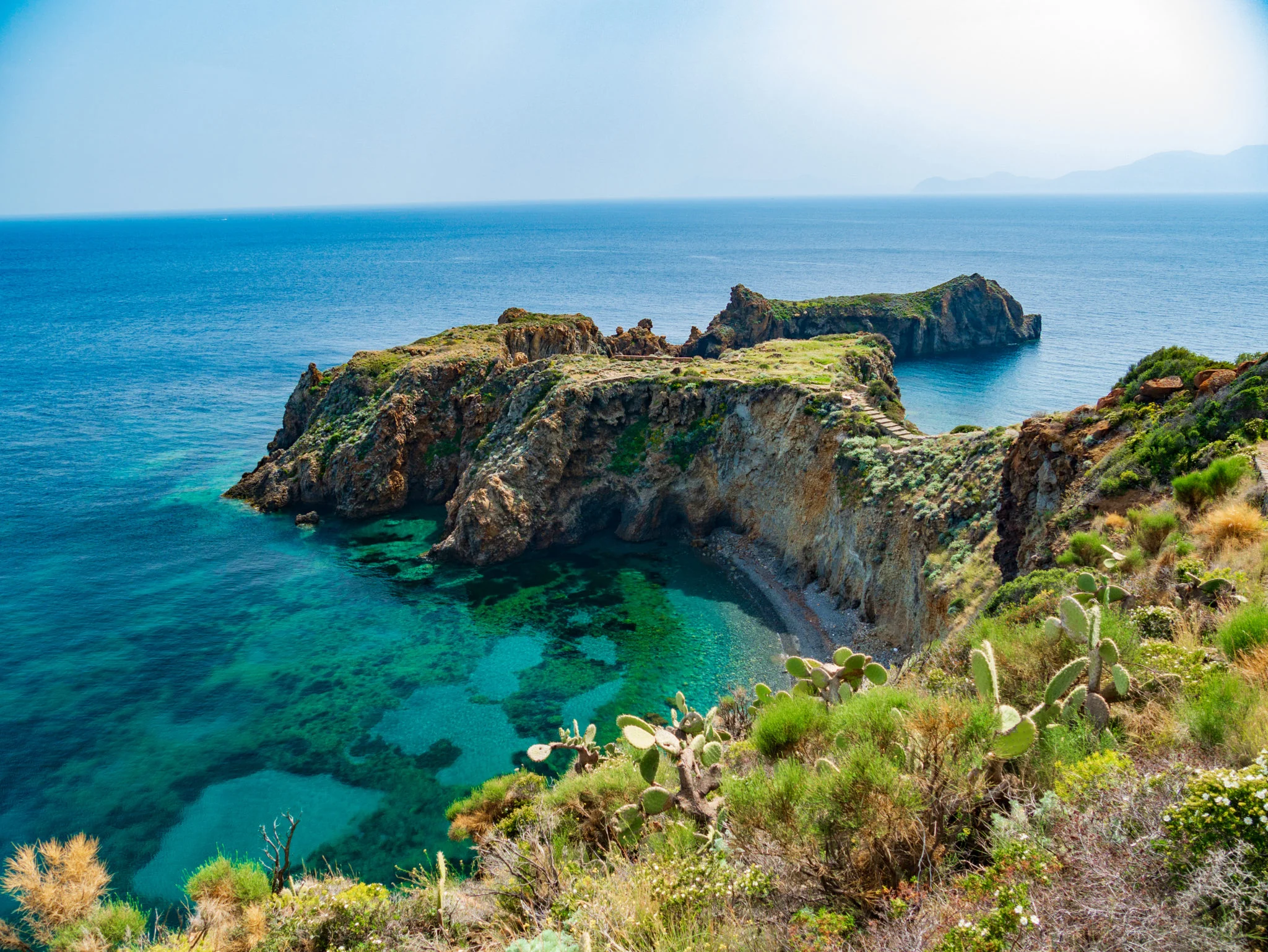


Public beaches are free, Porquerolles caps visitors at 6,000 a day in summer, and French citizens need only an ID card.
French Riviera beaches follow precise local rules: access, parking, animals, coastal protection. This page gathers them, then summarises entry to France for foreign visitors (information as of November 2026).
Public or private beaches
The French shoreline is public domain: access to the sea is free and a walkway of at least 3 m along the water must stay open, even in front of a private establishment. In practice, Nice has about twenty free public beaches and about fifteen private ones; Cannes has 18 free public beaches, 1 municipally run beach (Zamenhof) and 33 concessions; Pampelonne has about twenty sectors mixing free stretches and clubs. On a private beach you pay for the mattress or lounger (order of magnitude 20-40 € a day, 50 € or more at Pampelonne in summer), never for access to the water or the free beach next door. Clubs generally open from April-May to October; Club 55 at Pampelonne, for example, announces each season an opening from late March to early November.
Porquerolles: regulated access in summer
The islands of the Port-Cros national park (Porquerolles, Port-Cros, Levant) apply in high season an overall cap of 6,000 visitors a day, renewed each summer and tied to ferry ticket sales. The exact period (generally late June to late August) is published every year at portcros-parcnational.fr. In practice, book the La Tour Fondue boat (15-20 minutes) ahead in July-August, expect around 25-30 € return per adult (order of magnitude; fares to check with the operators) and allow for the Giens peninsula car park, paid and often full before 10 am. On the island, smoking outside built-up areas, lighting fires, camping and bivouacking are banned; dogs are under strict rules and picking plants is prohibited. Boat anchoring is regulated to protect the posidonia seagrass.
Parking and driving
- Pampelonne: car parks P1 to P5 are paid in season, free before 11 am and after 5 pm. Parking on the roadside is ticketed.
- Nice, Cannes, Antibes: multi-storey car parks cost 15-35 € a day in July-August; the tram, the TER and buses (a single ticket of about 1.70 € in the Nice area) are quicker in midsummer.
- Nice low-emission zone: it covers the Promenade des Anglais, quai des États-Unis and quai Rauba Capeu, where a Crit'Air sticker is required. Since 18 April 2025, cars and light vans are no longer affected; only heavy goods vehicles over 3.5 t, buses and coaches classed Crit'Air 4, 5 or unclassified are banned (fine of 68 €). Visitors in a private car are therefore not targeted; rule to check on nice.fr before leaving.
- Estérel and Maures massifs: access is banned or limited on some summer days when wildfire risk is high, under a daily prefectural order. Check the departmental map before heading to the Estérel coves.
Dogs, flags and belongings
Dogs are banned from most public beaches in season (generally 1 June to 30 September) under municipal by-laws; a few beaches or sectors are reserved for them, and each commune's rules apply. Swimming flags are green (supervised, no danger), orange (dangerous but supervised) and red (swimming banned), with purple signalling jellyfish or pollution. Never leave anything visible in the car: thefts from vehicles parked near the beaches are frequent in summer.
Tourist tax
It is charged by your host on top of the room price, per person and per night, from age 18. In the Nice Côte d'Azur Metropolis it is set as a percentage of the nightly price (about 6.7% in 2026), capped by classification; for a 3-star hotel, expect roughly 1 to 3 € per person per night, including the departmental share. The exact scale is on the commune's or tourist office's website.
Entering France
France is part of the Schengen area. French, Belgian and Swiss citizens enter with a valid ID card or passport. Canadians need no visa for a tourist stay of up to 90 days in any 180: they travel with a passport valid at least 3 months after the planned departure from the Schengen area and issued within the past 10 years. Since 10 April 2026, the EES (Entry/Exit System) records the face and fingerprints of non-European travellers at the external border, with no prior formality. ETIAS is not yet in force; do not pay any site offering it today. Nationalities that need a visa apply for a Schengen visa (about 90 € in fees) at a French consulate.
Health, customs and driving
EU and Swiss residents present their European Health Insurance Card (EHIC/CEAM); Canadians should buy travel insurance covering medical costs. No vaccine is mandatory. Emergency services are on 112 (or 15 for the SAMU ambulance, 196 for sea rescue). The currency is the euro, and contactless payment is accepted almost everywhere. At customs, 10,000 € or more in cash must be declared when entering or leaving the European Union. A European driving licence is recognised; for a foreign licence, ask your car-rental company.
Sources
The figures in this guide come from the sources below, checked on the publication date.
- www.theoule-sur-mer.org
- www.antibesjuanlespins.com
- www.cannes.com
- www.francebleu.fr
- www.menton-riviera-merveilles.co.uk
- nicepresse.com
- www.club55.fr
- www.rivieraedition.com
- fr.wikipedia.org
- provence-alpes-cotedazur.com
- baignades.sante.gouv.fr
- www.ramatuelle.fr
- www.rivieraedition.com
- cap-antibes.com
- nissactu.fr
- commons.wikimedia.org
- commons.wikimedia.org
- www.nice.fr
- www.cabaigne.net
- fr.climate-data.org
- www.portcros-parcnational.fr
- www.economie.gouv.fr